Grade I · list entry 1303100
St Michael and All Angels
Little Badminton, Hawkesbury, South Gloucestershire
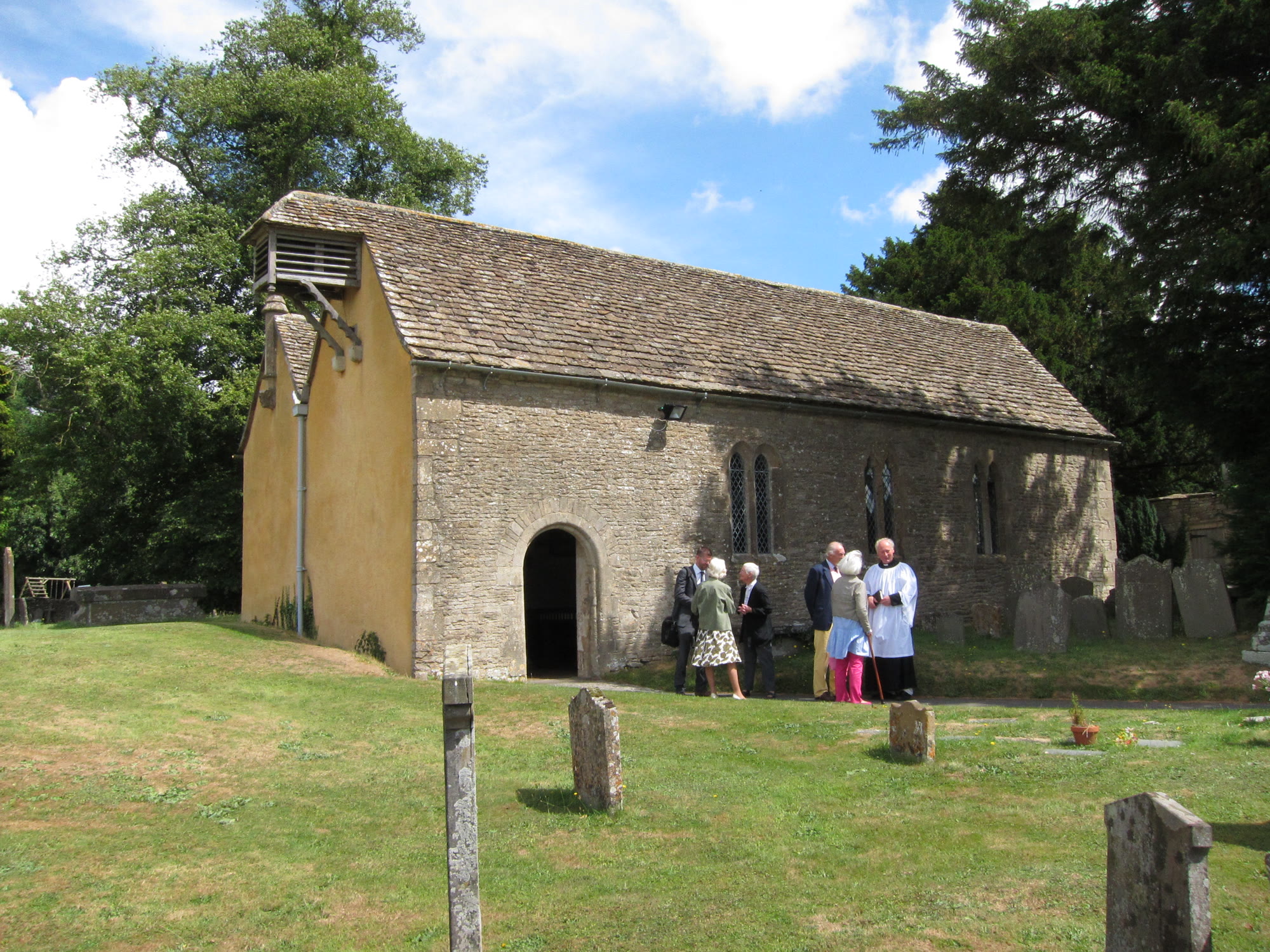
David Purchase, 3 July 2011. CC BY-SA 2.0. Resized copy of the Geograph photograph.
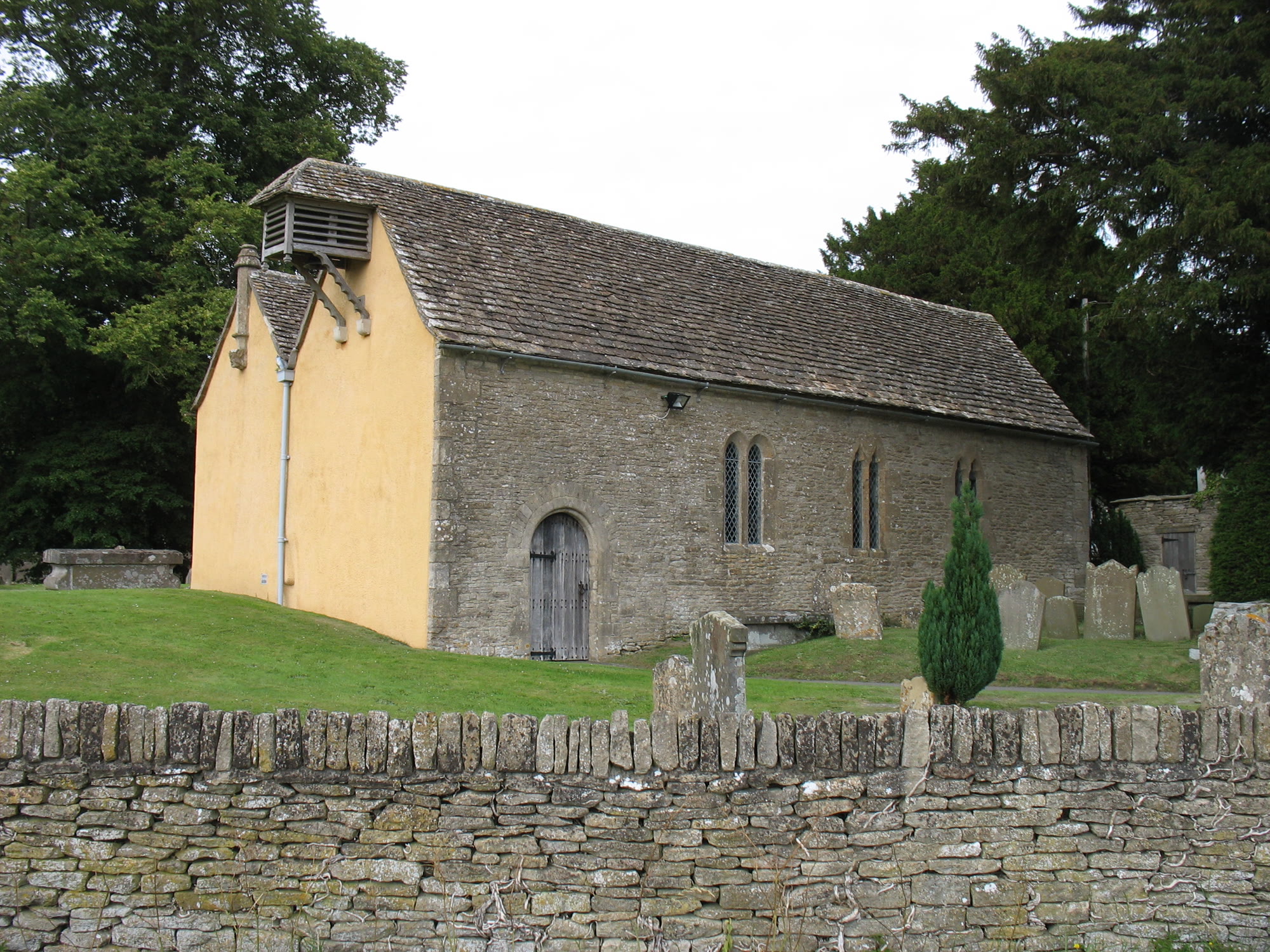
A small Anglican church on rising ground north of the village, with a timber bellcote where a tower might have been. In the 1960s a film crew supplied the missing tower for the length of a picture.
A tower for the camera
Sky West and Crooked is a British romantic drama, released in the United Kingdom in January 1966, directed by John Mills and starring Hayley Mills and Ian McShane. In the United States it was called Gypsy Girl.7 Wikipedia, citing a Turner Classic Movies article, states that it was shot on location in and around Little Badminton.7
In that article Lorraine LoBianco quotes John Mills’s autobiography. Mills recalled a search across England and Wales for a village with a church, a churchyard, a green, a pub and cottages he could hold in one shot. The place they chose was Badminton. It suited the picture except that, in his words, “the church had no tower.” The production built one of steel scaffolding and fibreglass.8
A location study on ReelStreets identifies the church scenes at St Michael and All Angels, Little Badminton, and treats the tower in the film as a prop. The same study also records locations in Buckinghamshire and Wiltshire, including studio work, so the film was not confined to this churchyard.9
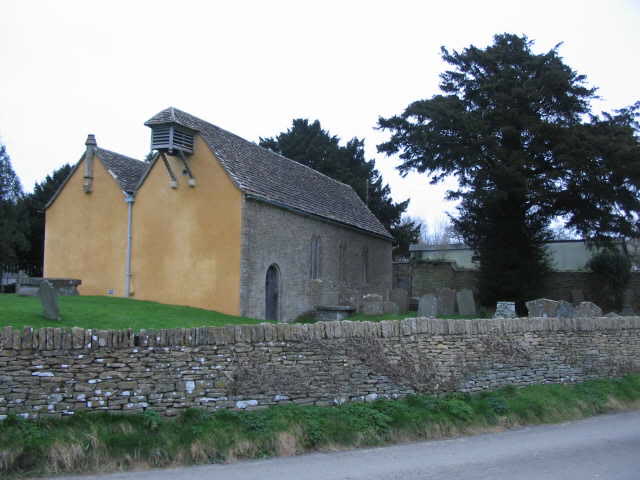
Historic England records an overhanging timber bellcote at the west end, and the list entry does not describe a tower.1 That is consistent with the reason Mills gave for building one. The photographs on this page show the bellcote, not a tower.
The building
Historic England lists the church at Grade I, first listed on 3 March 1961, under the name Church of St Michael and All Angels. The statutory addresses are the church and Little Badminton. The civil parish is Hawkesbury, in South Gloucestershire. The National Grid Reference is ST 80170 84252.1 Wikidata gives the coordinate 51°33′24.480″N, 2°17′14.712″W, and records the Diocese of Gloucester.2
The list description, which Historic England marks as generated from a legacy system, calls it an Anglican church of Early English character: early 13th century, restored in the 14th century, with north windows of the 19th. The walls are rubble, rendered on the north and west, with freestone dressings, under a Cotswold stone slate roof. The plan is a nave with a sanctuary and a north aisle.1
On the south are two two-light windows with cinquefoil heads and a rere-arch. The 19th-century north windows are of three lights with trefoil heads. The east window is 14th-century, of three lights with trefoil heads, an ogee-shaped rere-arch and a hood mould. The south door has a simple round arch. At the west end of the north aisle is a half-hexagonal shaft with a grotesque figure. Inside, a four-bay arcade of pointed arches stands on octagonal piers; the western pier and the respond have capitals. There is a trefoil-headed piscina in an ogee-headed opening, and a Perpendicular octagonal font.1
South Gloucestershire Council’s conservation-area document places the church to the north of the village on rising ground, and agrees on the early 13th-century date, the 14th-century restoration, a 19th-century alteration, the round south door and the timber bellcote. It says the 19th-century work inserted two additional windows. The village, it says, lies within the Badminton Estate, just north of Great Badminton, with the parkland of Badminton House adjoining to the east. Little Badminton was designated a conservation area on 30 March 1983.3
The Badminton Benefice lists St Michael and All Angels, Little Badminton, among its churches, and lists St Michael and All Angels, Great Badminton, separately.4 Historic England’s list entry 1155177 is another Grade I church of the same dedication, at Badminton Park. This page is only the Little Badminton building.10
What the parish adds
The parish’s own note describes the nave and the north aisle as almost equal in size, and says that only the west pier and the respond have capitals. It calls the westernmost window on the south much plainer than the others, and records a suggestion that this is impoverished work from a building stopped by the Black Death in 1348.5 Historic England’s list entry does not make that claim.1 The suggestion is the parish’s, and the cause is to be confirmed.
The same note records a second piscina, with a restored head, by the altar; an octagonal Perpendicular font bowl with quatrefoils in the panels; and a chalice and paten cover of 1715 by Simon Pantin. It places the church on the north side of a village green where a round dovecote stands. It states that Little Badminton is not open except on days of services.5 Times change. This page does not copy a rota, a telephone number or an email address. Current arrangements are on A Church Near You.
To be confirmed
A sentence from 1848
Samuel Lewis, in A Topographical Dictionary of England (1848), describes Little Badminton as a tything in the parish of Hawkesbury, in the union of Chipping-Sodbury and the hundred of Grumbald’s Ash, with 127 inhabitants. He then writes: “Here was a chapel to the vicarage of Great Badminton, now in ruins.”6 The Grade I building in the list entry is a standing church whose fabric Historic England dates to the early 13th century, with later restoration.1 How Lewis’s sentence relates to that building is not settled in the sources used here. It is left as to be confirmed, and it is not rewritten into a story of ruin and rebuilding.
Photographs
Three photographs, and no others. Licences and the unaltered files are in the credits.
Where it stands
The point is the centre of OpenStreetMap way 813192633. It agrees with the Wikidata coordinate to within a few metres.2,11 No house number or private address is published. The grid reference is ST 80170 84252.1
Loading the map
Tiles: OpenFreeMap Positron. OpenFreeMap © OpenMapTiles. Data © OpenStreetMap contributors, ODbL. All churches in this snapshot.
Collection Plate
Appeals for a named piece of work, with a thermometer. This one is an example, stamped as such.
Example · not a live appeal
Collection Plate
Leaking roof
An example of how an appeal will look. St Michael and All Angels has not published this appeal through Every Church, and the £500 is not a sum the church is recorded as needing.
£500
Example targetSample fill £180
The bar is filled to £180 only so the thermometer can be seen. That figure is not money received.
Lychgate
A memory may be Christened here, Married here, or A loved one rests here. It will be published only with consent. These buttons do not collect one.
These buttons are the shape of Lychgate. They do not open a form, and they do not keep a name.
Alms
A gift is meant to go straight to the church, on the giving page a treasurer connects. This preview opens that handoff and does not take a payment.
Sources
Every factual claim above points at one of these. Accessed 29 October 2026.